
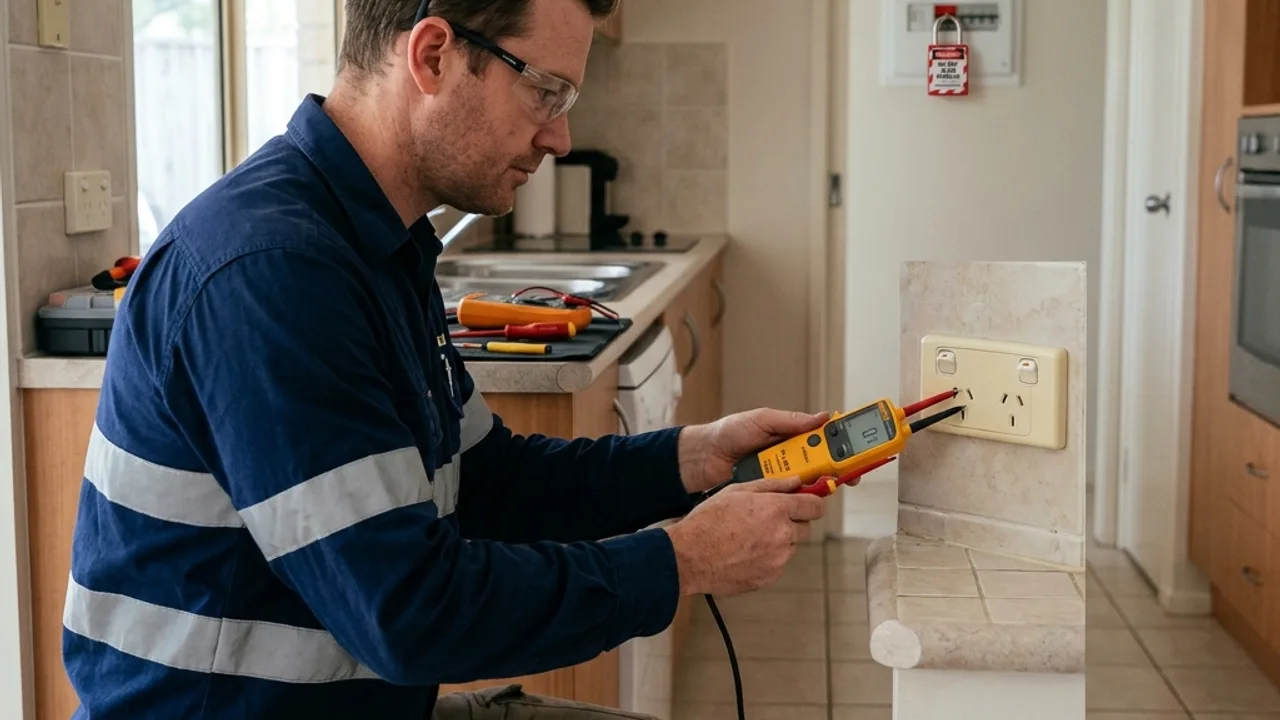
Electrical fault finding for power that keeps tripping
A trip tells you that something needs checking. It does not tell you whether the fault is in an appliance, a circuit or an outlet. Licensed testing can help find the cause before repair work is agreed.
Find the cause before replacing parts
- Which rooms or circuits lose power
- What was in use when the switch tripped
- What testing and repair the quote includes
One room loses power again
If the same area loses power each time it is used, note the pattern. Do not keep resetting the switch. Tell the electrician what happened so the fault can be checked without guessing.
What fault finding should establish
A fault-finding visit should narrow down where the problem sits: an appliance, a fitting or the fixed installation. The electrician may need access to several rooms and may interrupt power while testing. A replacement part should follow the finding, rather than being guessed from a symptom. Ask for an explanation of the fault and which checks support it.
Why a fault-finding price can vary
A fault that happens during the visit can be easier to trace than one that appears only sometimes. Hidden wiring, roof access and several affected circuits can add time. Ask whether the charge covers a fixed diagnostic period or time spent, what the hourly basis is, and when approval will be sought for more work. Parts and repairs may be separate.
After the repair
Ask what was repaired, what was tested and whether any limits remain. If a fault returns, record when it happened and what was running, without touching damaged equipment. Keep the invoice and any testing or safety documents provided. A clear repair record is more useful than a general claim that the power is working again.
For official safety and licence guidance, visit the Queensland Electrical Safety Office.