
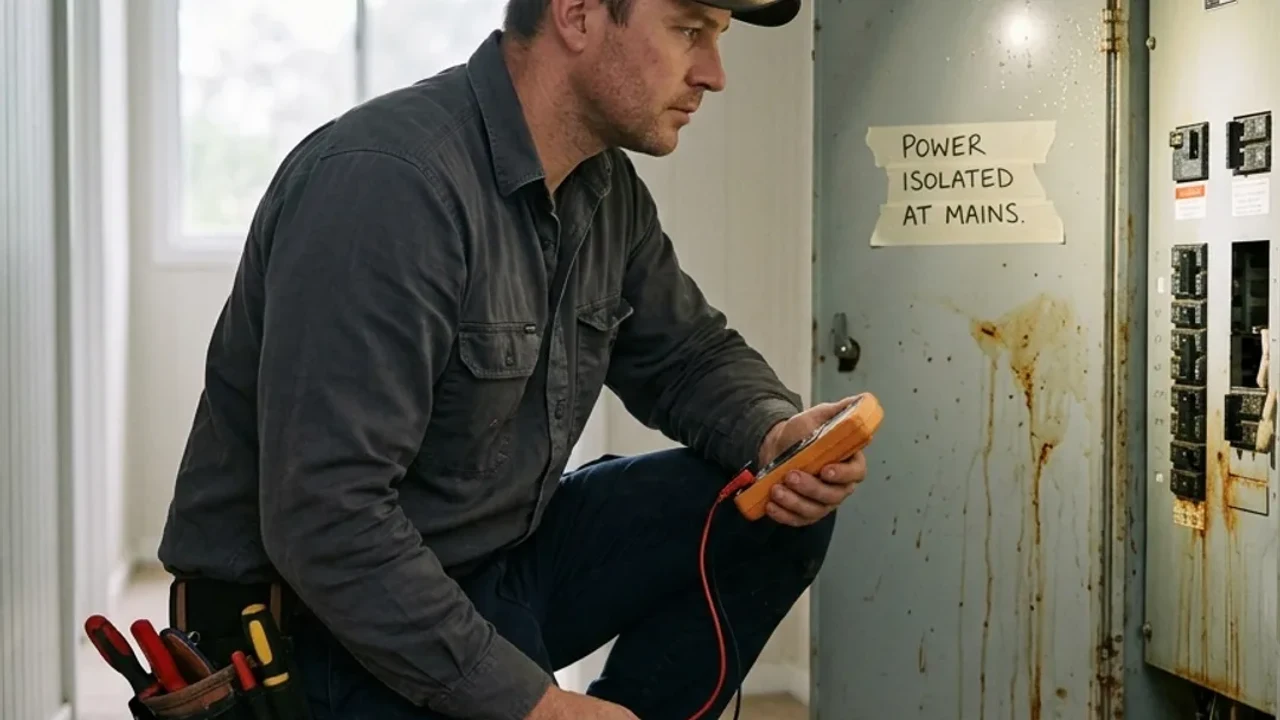
Electrical safety check after storm or flood damage
Equipment can look dry while still needing inspection and testing. Water exposure may affect outlets, wiring or appliances. The safe return to service depends on what was affected and what the licensed checks find.
Check before turning power back on
- Areas and equipment reached by water
- Power isolation and safe access
- Testing, repairs and written findings
Water reached an outlet
Do not turn it back on because the surface has dried. Tell the electrician where water reached and whether power is isolated. Stay out of unsafe areas.
Dry equipment can still be unsafe
Water can leave dirt, corrosion or damage inside fittings and equipment. A dry faceplate can hide damage inside. Do not plug in or energise an affected item to see if it works. A licensed electrician needs to assess the installation and explain what can be tested, repaired or replaced.
An inspection and a return to service are separate decisions
The electrician may inspect several circuits and affected items before deciding what can be returned to use. Some equipment may need replacement or further specialist assessment. Ask what is included in the inspection, what remains isolated and whether another visit is needed. Supply restoration may also involve the electricity distributor.
Make the site details clear from a safe place
State which rooms or outdoor areas were affected and the highest water level you observed safely. Mention pumps, outlets, appliances and the switchboard if relevant. Ask how findings will be recorded for later repairs or an insurer. Do not enter an unsafe building or touch wet equipment to collect photos.
For official safety and licence guidance, visit the Queensland Electrical Safety Office.